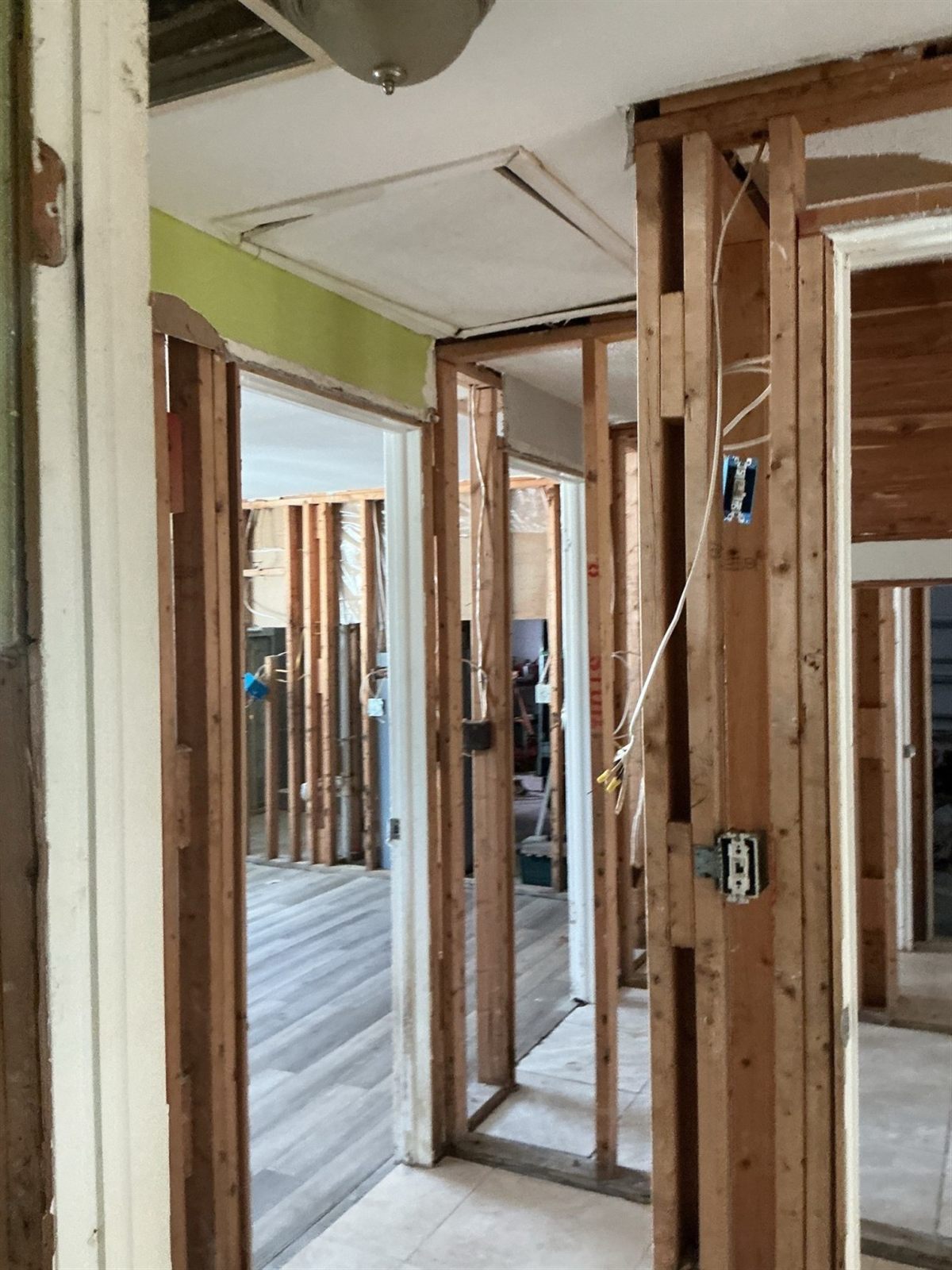
Does your whole house need rewiring?
An older home does not automatically need a complete rewire. The condition of its wiring, past alterations, and the work you’re planning matter more than its age alone.
A full rewire may be worth considering when wiring problems extend throughout the house, insulation is deteriorating, or a major renovation gives you the opportunity to replace an aging system. Repeated electrical problems also deserve an assessment before deciding on a solution.
Sometimes the answer is a smaller repair or replacing selected circuits. If you’re unsure where to start, an electrical safety inspection can help identify what needs attention.
What goes into a whole-house rewire?
We start by looking at your existing wiring, electrical panel, room layout, and access through the attic, walls, or ceilings. We’ll also discuss appliances, lighting, and any changes you’re planning.
Your written scope will identify:
- The circuits and wiring being replaced throughout the home.
- The outlets, switches, and lighting connections included in the work.
- Grounding and protective devices required for the installation.
- Any panel or electrical service work needed separately.
- Permits, inspections, and access openings involved in the project.
We’ll explain how replaced wiring will be disconnected, what can be removed, and whether any inactive wiring will remain concealed. You’ll also know who is responsible for repairing and painting any wall or ceiling openings.
How much does whole house rewiring cost?
Most whole house rewires we do run between $10,000 and $20,000, dependent on square footage. Within that range, the number of circuits, wiring access, and the condition of the existing electrical system move the price. A home with open walls presents a different job from a finished home where wiring must be reached through limited openings.
Panel work, additional outlets, and changes to your layout can also affect the scope. We assess the property before quoting so the estimate reflects your home and the work you actually need.
Rewiring, panel replacement, or additional power?
These solve different problems. Rewiring addresses the wiring running through your home. Electrical panel replacement replaces the equipment distributing power to those circuits; it does not replace the wiring inside your walls.
An electrical service upgrade increases the home’s available electrical capacity when the existing service cannot support the planned demand. A rewire does not automatically require a service upgrade. We’ll evaluate both before recommending the work.
If aluminum branch-circuit wiring is the concern, ask about aluminum wiring repair and whether a targeted approach is suitable for your installation.
Remodeling only part of your home?
We also handle rewiring for kitchens, bathrooms, additions, and other renovations. We’ll work with your remodeling plans to determine which existing circuits can remain and where new wiring is needed.
If you’re adding an appliance rather than rewiring the house, a dedicated circuit installation may be the service you need.
Insurer raised a wiring concern?
Share the inspection report or the insurer’s written requirements when you contact us, and we’ll explain the work needed. See our guide to Florida four-point inspections for what insurers look for.
Let’s take a look at your wiring
Tell us where the home is, what concerns you’ve noticed, and whether you’re planning a renovation. Coastline Electric Inc. rewires homes in Hudson, Spring Hill, New Port Richey, Trinity, Odessa, Brooksville, and nearby communities, with residential service across Pasco, Hernando, Citrus, Hillsborough, Pinellas, and Polk counties.
Prefer to talk now? Call (727) 862-7950.