Florida had the highest lightning density of any U.S. state in Vaisala's 2025 report, and lightning is only one source of surges. Utility switching, a neighbor's transformer, and the motors and compressors inside your own home all push short voltage spikes through the wiring. HVAC systems, appliances, and anything with a control board can be vulnerable to that damage.
A whole-home surge protector installed at or near the main electrical panel helps limit those spikes. Coastline Electric Inc. has installed them for homeowners in Pasco, Hernando, Hillsborough, Polk, Pinellas, and Citrus counties as part of the residential electrical work we have done since 1984.
How Whole-Home Surge Protection Works
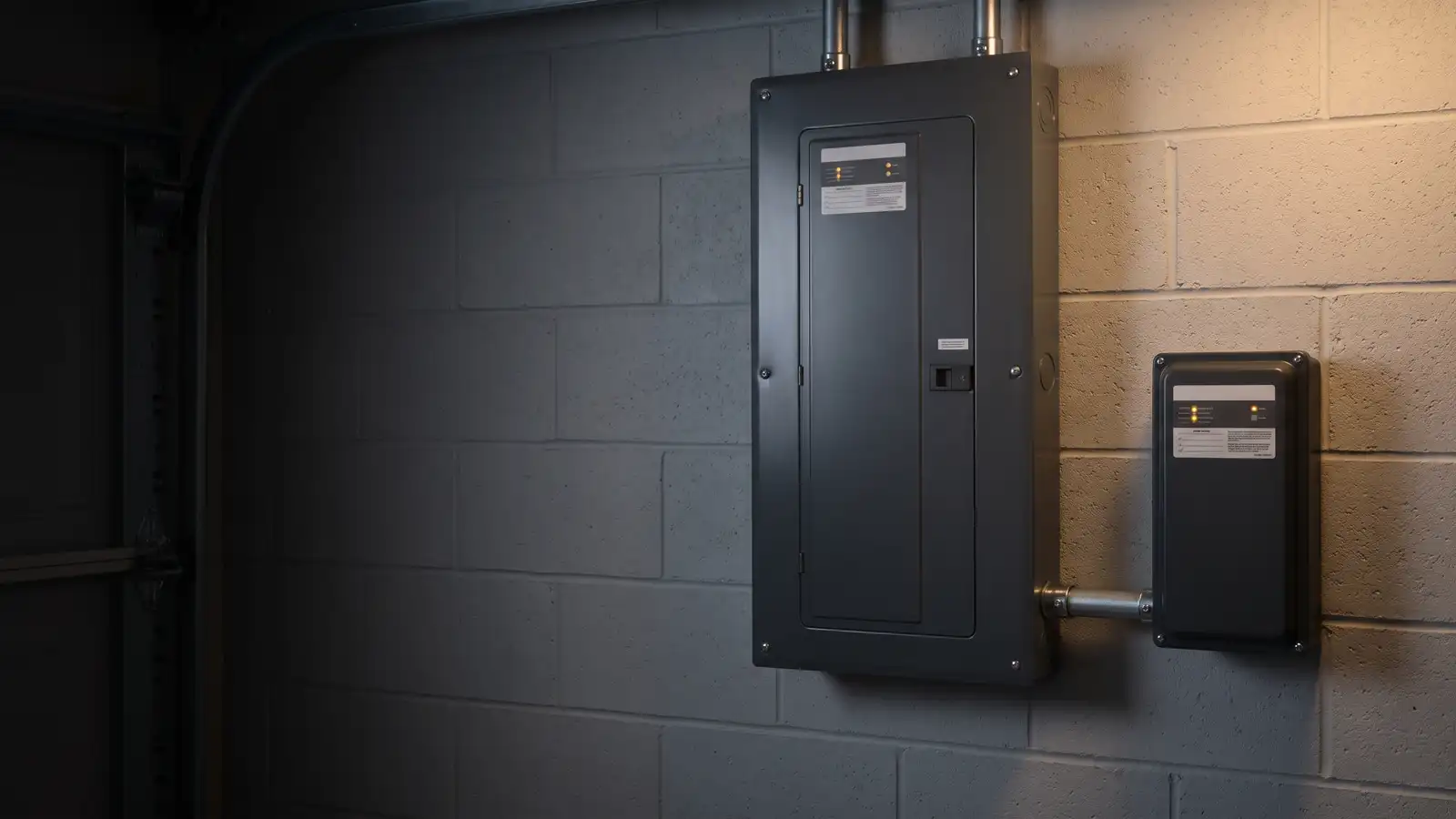
Installed at or near your electrical panel, a whole-home surge protector helps limit brief voltage spikes by diverting surge current. We select the connection method and any required breaker protection according to the device's listing and manufacturer instructions. What it covers, and what it does not, depends on the device selected and how it is installed.
Type 1 vs. Type 2 Devices
Type 1 and Type 2 are installation classifications under UL 1449, not tiers of better or worse protection. Depending on its listing, a Type 1 device may be installed on either the line or load side of the service disconnect; Type 2 devices are installed on the load side, typically at the main panel. We evaluate your setup and the selected product's requirements to recommend an appropriate installation.
Main Panel Installation
Installing surge protection at the main panel places it at a central point in your electrical system, where it can help limit surges arriving through the electrical service. Performance depends on the selected device and proper installation, including sound grounding, which we verify during the install. If your panel is full or outdated, we can install the protector as part of an electrical panel upgrade.
Layered Protection
A panel-mounted device and point-of-use protection complement each other. The panel device helps limit the larger surges arriving through the service; a quality plug-in protector or a dedicated protector at sensitive equipment adds a second layer close to the equipment. For a home theater, office equipment, or an HVAC unit, we will tell you whether that second layer is worth adding.
HVAC, Appliances & Electronics
HVAC systems, appliances, and electronics can be vulnerable to surge damage: compressors, control boards, and anything with a circuit board inside. Reducing the surge energy that reaches them is the point of the installation. It lowers the risk of that damage; it does not guarantee against it.
Equipment We Install
We install surge protective devices from manufacturers such as Siemens, Eaton, and Square D, and can accommodate customer-preferred devices when they are listed for the installation and compatible with your panel.
What It Does Not Do
Surge protection reduces the risk of damage from voltage surges but does not guarantee protection against every event. It does not provide backup power and does not make a home lightning-proof. We explain the selected product's coverage and limitations before installation.
What to Expect
- Review your setup. We look at the panel, the service, and the grounding, and ask what you are trying to protect.
- Confirm the device, scope, and price. You get the selected device, exactly what the installation includes, and your all-inclusive price before any work starts.
- Install. A licensed electrician mounts and wires the device at the panel. Power is off briefly and restored before we leave.
- Walk you through it. We show you the status indicator, what it means, and give you documentation of the make, model, and installation date.
How Much Does Whole-Home Surge Protection Cost?
Typical whole-home surge protection installations from Coastline Electric Inc. cost $500–$800 all-inclusive. We can accommodate a wide range of customer-preferred surge protection devices. Before work begins, we confirm the selected device, its compatibility with your electrical setup, exactly what the installation includes, and your final all-inclusive price.
Any work outside the agreed installation scope is discussed and quoted separately before approval. Unrelated panel repairs, or a panel upgrade you ask for at the same time, are their own line items and are never folded into the surge protection price without telling you.
Why Choose Coastline Electric?
Since 1984: Over 40 years of residential, commercial, and industrial electrical work in west central Florida.
Licensed & AVETTA Certified: Florida electrical contractor License #EC0002969. Our AVETTA certification reflects the safety and compliance documentation required by our commercial and industrial clients.
Local: Based in Hudson, serving homeowners in Pasco, Hernando, Hillsborough, Polk, Pinellas, and Citrus counties.
Price before work: Scope and all-inclusive price confirmed before we start, in a single visit for most homes.
When Whole-Home Surge Protection Makes Sense
Most Florida homes benefit from a panel-mounted surge protector. It is a particularly good fit if any of the following apply. None of these is proof of surge damage on its own; some point to problems that need diagnosing first.
You have had electronics or appliances fail after a storm. A surge is one possible cause among several, and the cause of a past failure may not always be possible to confirm. We can evaluate your electrical system and recommend protection to help reduce the risk of future surge damage.
Lights flicker or the power blinks often. Flickering usually has an underlying cause, such as a loose connection, an overloaded circuit, or a utility issue, that a surge protector will not fix. It needs troubleshooting first; the surge protector then guards against the spikes that often accompany unstable power.
You rely on expensive electronics. Variable-speed HVAC, home theaters, home offices, and smart-home systems all have control boards that can be vulnerable to surge damage.
Your home is older. Older wiring and grounding can leave equipment more exposed. An electrical safety inspection will tell you where your home stands before the protector goes in.
You want backup power too. A generator connected through an appropriate transfer switch can supply backup power during an outage. Surge protection serves a different purpose: reducing the risk of damage from voltage spikes. We install both.
Still weighing it? Read about the benefits, limitations, and installation cost. Getting ready for hurricane season? Our storm preparation guide covers what else to check before the first storm.
Florida Electrical Code & Compliance
In Florida, surge protective devices are installed under the National Electrical Code as adopted by the state and under the manufacturer's installation instructions for the specific device. Our licensed electricians install to both, including proper grounding and bonding, correct overcurrent protection for the device, and the shortest practical conductor lengths, which matter more to an SPD's performance than most homeowners expect.
Following those requirements gives the device the best chance to do its job. It does not change the physics: a surge protector's effectiveness depends on the size of the surge, the device's ratings, and the quality of the grounding it is connected to.